 Garage Door and Parts Supplier California
Garage Door and Parts Supplier California
Garage Door and Parts Supplier California
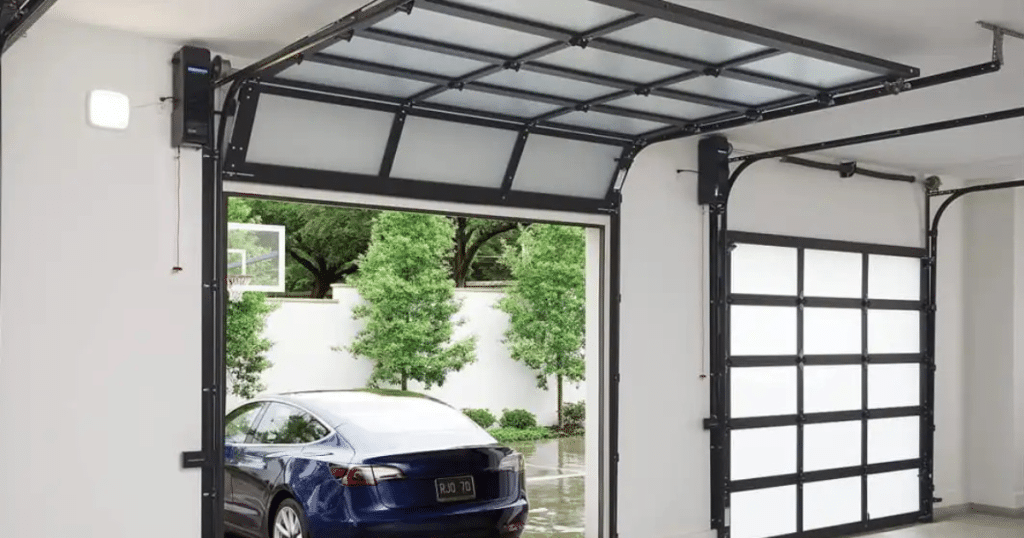
The vertical track is the foundation of how a garage door moves. Every roller that travels up or down that rail depends on the track being straight, firmly mounted, and correctly spaced from the door panel edge. When the track is off, everything downstream suffers.
In areas like West Ewell, East Ewell, and the streets running through Ewell Village, garages vary considerably in age and construction. Older properties near Ewell High Street or along Church Street may have original track systems that have never been replaced. Newer builds near Stoneleigh or Auriol often have builder grade hardware that was installed quickly and without much attention to long term performance.
Either way, understanding how vertical track geometry influences roller travel and door balance is a practical skill for any homeowner. It connects directly to the broader picture of garage door subsystem component structures, where track condition sits at the base of every performance issue that follows from it.
Each roller on a sectional garage door rides inside the vertical track channel. The track walls on either side of the roller control lateral movement, keeping the panel travelling in a straight and consistent plane as it rises and lowers.
If the track channel is too wide for the roller, the panel will wobble slightly during travel. If it is too narrow, the roller binds and creates resistance. Either condition adds unnecessary load to the spring system and the opener motor, wearing both out faster than normal.
Properties along Kingston Road and Ruxley Lane often feature garage doors that have been repaired piecemeal over the years, with rollers from one brand fitted into track from another. Mismatched components are one of the most common sources of poor roller travel, and the fix is usually simpler than people expect once the root cause is identified.
A vertical track that is not plumb, meaning it leans slightly in or out from the door panel, creates a condition where the roller is constantly being pushed against one wall of the channel rather than riding centrally. That constant side load transfers into the panel itself, pulling the door out of square over time.
Garages near Ewell Court and around Cuddington sometimes have walls that have settled unevenly since original construction. A wall that has moved even a few millimetres can pull a bracket out of plumb enough to cause measurable track lean. That lean is often blamed on the spring or opener when the actual cause is the track geometry.
Checking plumb on a vertical track takes about two minutes with a spirit level held against the track face. It should be done any time a door starts showing signs of travel resistance or uneven movement between the two sides.
The gap between the back of the track channel and the door panel face is a critical measurement that affects both roller function and weather sealing. The standard gap for most residential sectional doors is around ten to twelve millimetres, but this can vary depending on the roller stem length and panel thickness.
Too small a gap and the panel face contacts the track mounting bracket as the door travels, causing scraping damage and adding friction that the spring system has to overcome. Too large a gap and the roller wheel no longer sits deep enough in the channel to guide the panel properly, which leads to the lateral wobble described earlier.
For homeowners near Ewell Downs or along Epsom Road who are fitting replacement track, the right starting point is to source Vertical Side Tracks that are profiled to match the existing roller specification. This eliminates guesswork on gap setting and gives a baseline that is correct from the first installation.
A door that moves freely and stays balanced places the designed load on the torsion or extension spring. A door fighting a misaligned or damaged track places an unpredictable extra load on the spring, which shortens spring life and increases the risk of breakage at inconvenient moments.
The relationship between track condition and spring loading is direct and measurable. Lift the door manually to mid travel and release it. A balanced door in a clean track will stay at mid height without rising or falling. A door that drops signals either a spring that is underloaded for the door weight or a track that is adding friction the spring cannot overcome cleanly.
Following torsion balance load control principles gives a clearer picture of how track friction interacts with spring tension and why fixing the track first often resolves what looks like a spring problem.
Residential garage doors in the UK are most commonly found in seven foot and eight foot heights. The vertical track length must match the door height exactly, as an undersized track will not guide the bottom panel section far enough to allow the curve transition to engage cleanly, while an oversized track leaves unused rail at the bottom that can catch debris and cause roller obstruction.
Homes along London Road and near Bourne Hall Park with standard height openings typically need a seven foot vertical track set. For these installations, you can Shop Garage Door Track Set in the correct seven foot length to get a matched pair ready for direct installation without modification.
Properties near Nonsuch Park or along Chessington Road with taller garage openings need the eight foot specification. For those applications, you can Buy Heavy Duty Door Tracks in the eight foot paired format, which provides the full vertical run needed for a taller opening without joins or extensions in the track.
Vertical track condition, plumb, gap, and length are four variables that each affect roller travel and door balance independently. Getting all four right at the same time is what separates a door that performs reliably for years from one that needs constant attention and adjustment.
Whether the garage sits on a quiet side street near Hogsmill riverside or fronts directly onto a busier road like the A24, the mechanical principles are identical. The door does not care about its surroundings. It responds to the quality of the track geometry it is given and performs accordingly.
A properly fitted vertical track system removes friction, supports correct spring loading, and keeps every roller travelling in the path it was designed to follow. That is the foundation on which everything else in a healthy garage door system is built.
Address: 4949 Florin Perkins Rd Ste 30A, Sacramento, CA 95826
Phone: (916) 414-9070
Legacy Garage Door Depot, with supplier stores in Santa Clara and Sacramento, delivers premium garage door parts at competitive prices. The firm provides a comprehensive range of components for homeowners, technicians, and garage door companies. Their inventory includes reliable torsion and extension springs, garage door openers, Liftmaster models, remotes, and keypads. They also stock rollers, cables, tracks, hinges, and seals, offering a full selection of genuine and aftermarket replacement parts with fast local and online availability.
The store operates 24/7 online and can be reached on their primary lines at, +1 408-850-2617 and +1 916-414-9070.